 Meristems-8
311 Syllabus
Meristems-8 They contain Ovules which are housed in the Ovary.
Carpels are the last to form and occupy the summit of the Floral Meristem.
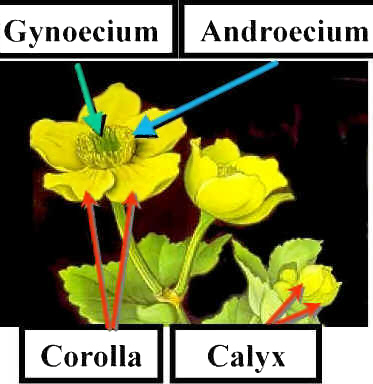 |
| Diagram & Photograph of a Ranunculus Flower. The Calyx (Sepals) resembles the Corolla (Petals). There are many Stamens in the Androecium and there are many Carpels in the Gynoecium. |
 |
 |
Diagram of a Long Section through a Ranunculus Flower: The Carpels occupy the Summit of the Stem and there are no residual meristematic cells. All of the Meristematic cells are used to make the flower parts. |
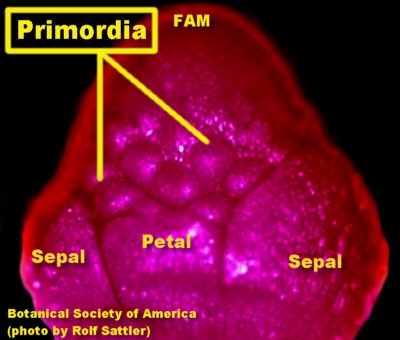 |
Intact Floral Apical Meristem (FAM) of Ranunculus: The Sepals are formed first and are the lowest flower parts. Petals are formed next, followed by Stamens and finally by Carpels. The entire FAM is used to make the flower parts. This meristem has begun to form Stamen Primordia but Carpel primordia are not yet visible |
