WB01343_1.gif (599 bytes)     Meristems-9    WB01345_1.gif (616 bytes)
311 Syllabus


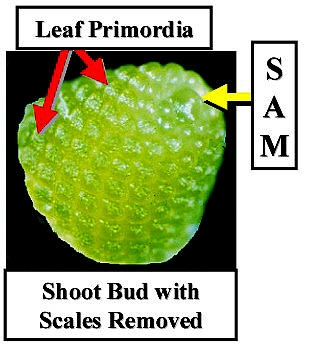
The arrangement of Primordia on the SAM or FAM determines the pattern of Leaves or Flower Parts on the stem.

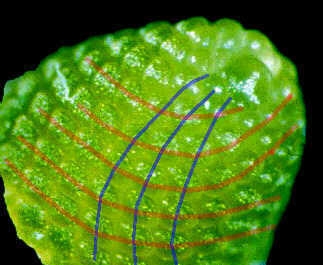
This is called Phyllotaxy and follows amazingly precise geometric patterns that can be characteristic for a particular species.

VegBudExposed240Lac.jpg (68457 bytes) VegBudExposedCelFiles.jpg (59721 bytes)

Vegetative Shoot Apical meristem of Spruce: Note the relatively large, smooth SAM and the smaller Leaf Primordia

This is the same meristem but adjacent leaf primordia have been connected to show the geometric relationship (Phyllotaxy) which exists between them.

Phyllotaxy can be very important for the efficient absorption of Light in Photosynthesis.

The positioning of a new leaf primordium is influenced by the primordia that are already present.

Experiments have shown that when leaf primordia are surgically removed the position of new primordia alters in a predictable manner.

Phyllotaxy may be different for Vegetative Stems, Inflorescences and Flowers on the same plant.

The most common arrangements are

Spiral (one leaf/node)

Opposite (two leaves/node) Decussate is a specific type of opposite.

Whorled (three or more leaves/node)


LeafAlternate200.jpg (24679 bytes)
A
LeavesOpposite200.jpg (19750 bytes)


B

Common Leaf Arrangements:

A = Spiral (Alternate)

B = Opposite

C = Whorled

LeavesWhorled200.jpg (31312 bytes)
C

WB01342_.gif (412 bytes)