WB01343_.gif (599 bytes)  Plant Cell Walls - 14 WB01345_.gif (616 bytes)
311 Syllabus


Formation of New Cell Walls following Cytokinesis

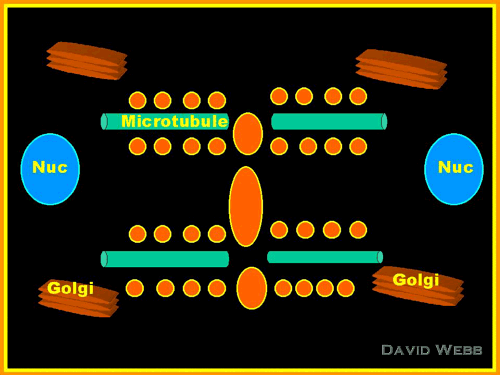
Phragmoplast (Microtubules & Golgi Vesicles) forms at Late Anaphase-Telophase

Microtubules provide the orientation for Golgi Vesicles which contain Cell Wall Precursors that form the Cell Plate.

CellPlate-1.gif (42121 bytes)
Following Nuclear Division the Phragmoplast forms near the center of the former Metaphase Plate. The Phragmoplast is composed of Microtubules & Golgi Vesicles. The fused central Vesicles are called the Cell Plate.

CellPlate-2.gif (35802 bytes)
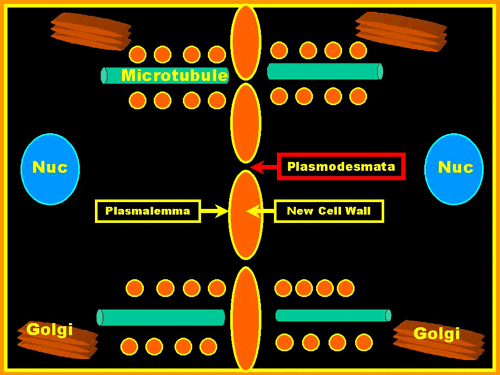
The vesicles from the two new cells move towards the center and fuse. The contents of the Vesicles become the Middle Lamella of the new Cell Wall. The vesicles from the two new cells move towards the center and fuse.The contents of the Vesicles become the Middle Lamella of the new Cell Wall.

CellPlate-3.gif (43311 bytes)
Microtubules appear to guide the movement of the Vesicles & these become more peripheral as the new wall grows.There are gaps in the Cell Plate. These become Plasmodesmata and connect the cytoplasm of both new cells. This process progresses from the center towards the to the periphery until the New Wall joins the Old Wall.

CellPlate-4.gif (10175 bytes)

Self Assembly Hypothesis

The various polymers which form  the wall (Cellulose - Hemicellulose - Pectins)  have an inherent capacity to self-organize and may not need complex biochemical process for this to occur.

Wall Enzymes -> Polymerization

Alternatively, there may be enzymes in the Cell Wall which participate in the polymerization of these molecules.        

WB01342_.gif (412 bytes)