 Rhodophyta - Reefs -
1
Rhodophyta - Reefs -
1 



They are the Most Abundant Organisms on the reef & they are Most Important for Reef Stability.
They Cement Coarse & Fine Grain Sediments into a solid substrata &
are the Principal Reef Builders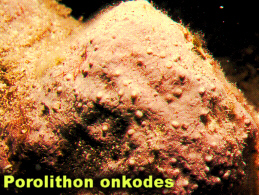
They can withstand Desiccation at Full Sunlight
| This SEM image shows the process of Epithallial Shedding which removes excess Epiphytes | 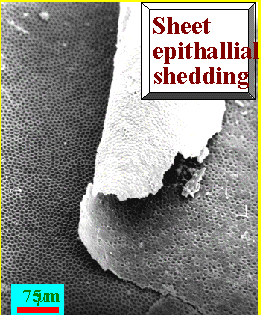 |
Encrusting coralline algae flourish where waves break on the reef, forming an elevated bank known as the Algal Ridge. As water from the waves returns seaward, its load of suspended sand and gravel scours a series of narrow ridges. The alternating ridges and valleys are known as spurs and grooves.
Corals growing on top of the spurs are stoutly formed and compressed in shape to withstand the extreme force of breaking waves.
