|
Primary vs Secondary Growth-4 |
 |
Secondary Growth in Stems 1,2,3 |
|
| Procambium -> Primary Phloem &
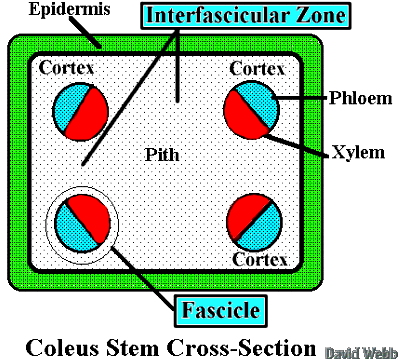
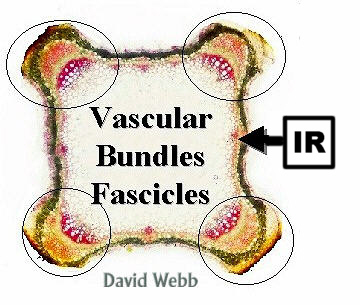
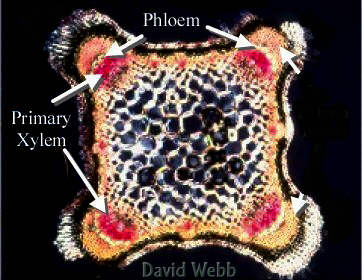
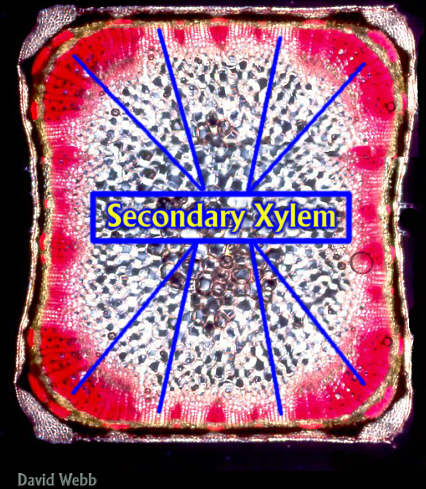
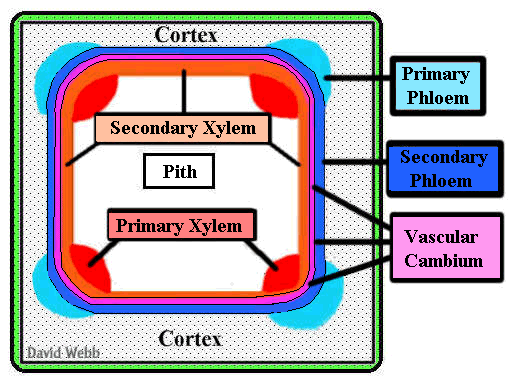
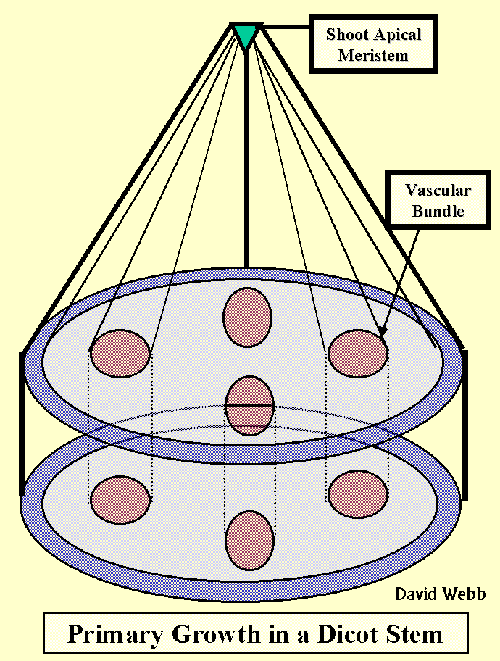
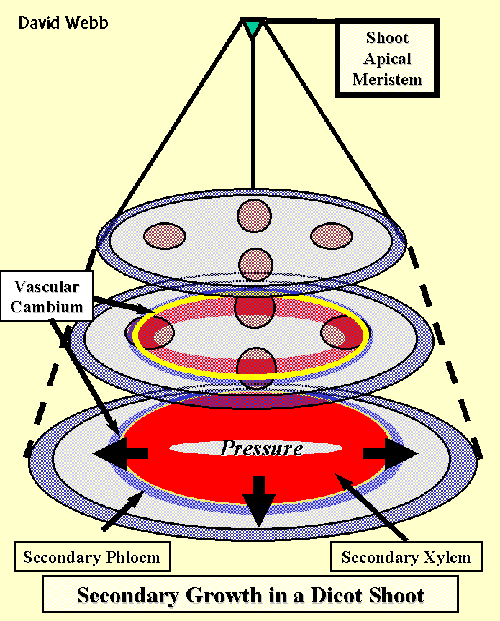
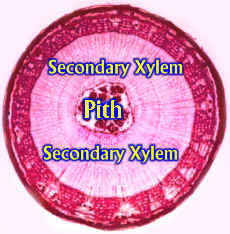
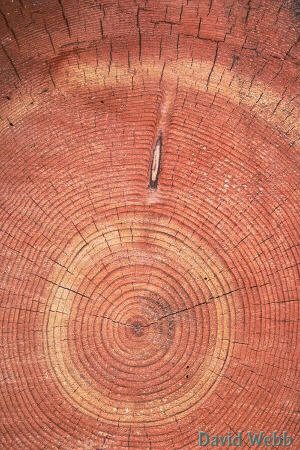
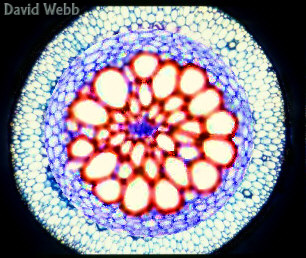
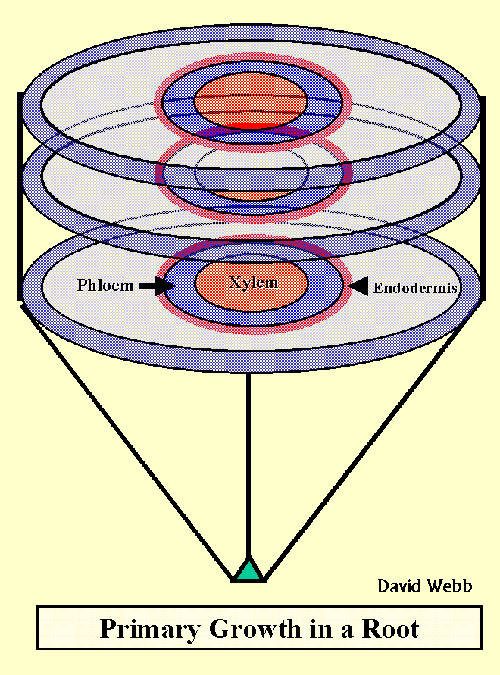
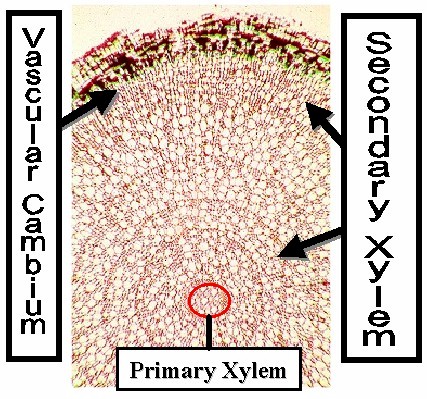
Primary Xylem Residual Procambium between Primary Phloem & Primary Xylem Remains Mitotically Active & becomes Vascular Cambium. Vascular Cambium divides Periclinally & produces Radial Files of Cells. Cells displaced towards the Inside become Secondary Xylem Cells displaced towards the Outside become Secondary Phloem. Cells of the Interfascicular Zone** are Induced to Divide to become the Interfascicular Vascular Cambium. Vascular Cambia Merge to form a Continuous Ring. Further Cambial Activity yields Secondary Xylem that becomes Wood As Wood Volume Increases, pressure develops this crushes the oldest Phloem. New, Active Phloem is continuously produced by the Vascular Cambium. Secondary Vascular Tissues are Important for many reasons. These include: Secondary Xylem or Wood is Essential for Increased Height which can lead to the Ecological Dominance of the aerial Environment.This is due to the dual properties of wood which are its innate strength and its ability to transport water over long distances. It also resists decay and allows the plant to accumulate mass over time. Consequently it does not need to start from ground zero each year, like herbaceous plants. Secondary growth in Roots produces a root system that is capable of anchoring large trees & for the development of enormous root systems that absorb minerals and water from the soil. The increased volume of Secondary Phloem results in a greater ability to transport sugars. Secondary Growth also occurs in Roots. The only difference is that Roots do not have a Pith because Primary Xylem is present in the center of the root. **Most Americans probably tuned into the recent Impeachment
|
Diagrams comparing Primary & Secondary growth in a Model Stem Root with Primary Vascular Tissues(Haplostele)
|

 Trial in the US
Senate. If you have ever been to Washington DC you will see how the early architects and
artists for governmental buildings were impressed with Greco-Roman architecture and
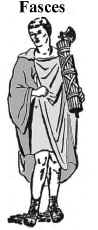
symbols. On each side of the seat occupied by the presiding officer of the Senate are two Fasces.
Not two Faces, although this would be very appropriate! The Romans had many symbols
of Power. One of them was a bundle of sticks lashed together
in a cylinder with a long axe in the center. This is a Fasces!
Trial in the US
Senate. If you have ever been to Washington DC you will see how the early architects and
artists for governmental buildings were impressed with Greco-Roman architecture and
symbols. On each side of the seat occupied by the presiding officer of the Senate are two Fasces.
Not two Faces, although this would be very appropriate! The Romans had many symbols
of Power. One of them was a bundle of sticks lashed together
in a cylinder with a long axe in the center. This is a Fasces!