|
Flowers &
Fruits-OV
|
|
The
Flower represents the most important reproductive adaptation for plants. The Ovules of
the flower are enclosed bu the Ovary Wall or Pericarp. This protects them during their development and
maturation. Furthermore, the Pericarp becomes
the principal part of the Fruit.
reproductive adaptation for plants. The Ovules of
the flower are enclosed bu the Ovary Wall or Pericarp. This protects them during their development and
maturation. Furthermore, the Pericarp becomes
the principal part of the Fruit.
Fruits not only add another protective layer but they also have specific adaptations for seed dispersal via biotic and abiotic agents.
Ancestral flowers contained many Sterile and Fertile Elements and relied on wind or water for fertilization and seed dispersal. More specialized or Advanced Flowers have highy specialized adaptations for both of these vital reproductive functions. The successful, rapid evolutionary explosion of Angiosperms could not have ocurred without the advent of the flower.
The table below contans a few example of flowers which have various mixtures of Ancestral and Derived Traits. The "Primitive" flowers are on the left and the "Advanced" are towards the right.
|
 Anemone is a member of the Ranunculaceae & relies on wind pollination. However, even unspecialized flowers may be visited by pollinators.
|
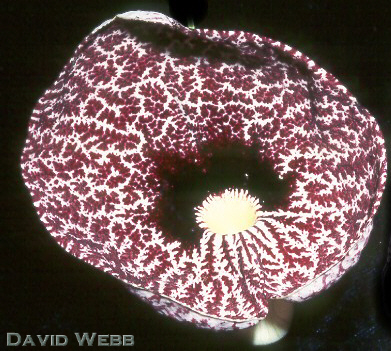 Aristolochia has an extremely complex interrelationship with small flies that are lured inside and held captive until the flower matures and is pollinated successfully!
|
 Members of the Milkweed Family have highly specialized flowers that have coevolved with specific insects who efficiently pollinate its flowers.
|