|
|
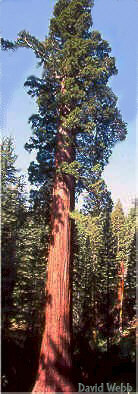
Phloem is specialized for Carbohydrate Transport and is typically found adjacent to Xylem. In order for plants to evolve in size and complexity it was essential to have a rapid system for the movement of carbohydrates from one part of a plant to another. This is obvious if you consider a large
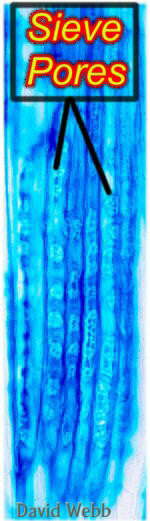
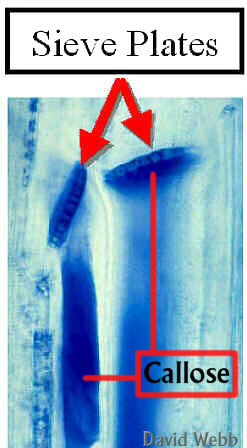
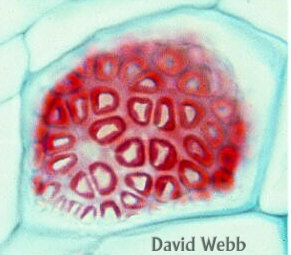
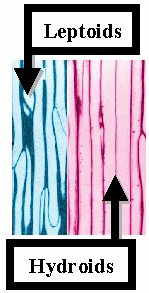
tree like The conducting cells of Phloem are called Sieve Elements. There are two kinds of these, namely: Sieve Cells and Sieve Tube Members (STM). This is analogous to the situation in Xylem. Both types of Sieve Elements have Sieve Pores lined with Callose and both are Enucleate at maturity. Callose is a polysaccharide that is involved in the regulation of the Sieve Pore diameter. It is a biochemical hallmark of Sieve Elements. STM are rectangular and have many sieve pores on their end walls which are called Sieve Plates. Sieve Cells are elongate with tapered end walls. They lack Sieve Plates as their Sieve Pores are more widely distributed along their length. Sieve Cells have a smaller diameter than STM, and are less efficient at translocation. Sieve Cells are ancestral and STM are advanced. The Magnoliophyta typically have STM while most other plants have Sieve Cells in their Phloem. A stack of STM make a Sieve Tube! This helps to explain why the largest Bryophyta had "Vascular Tissues". The Leptoids of Bryophytes have most of the traits of Sieve Elements from typical Vascular Plants, including Callose. |
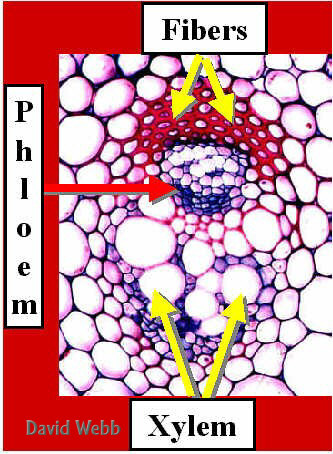 A Typical Vascular Bundle with Xylem, Phloem and Sclerenchyma Fibers.
|