|
|
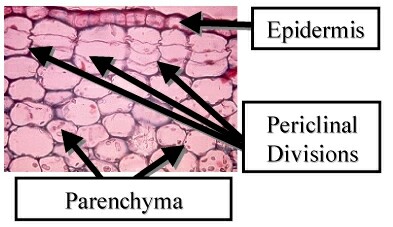
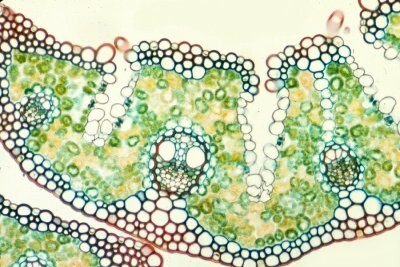
Parenchyma tissues perform most of the synthetic functions in plants.The development of Specialized Photosynthetic Tissues has been of great adaptive significance. Ancestral plants had a uniform, isodiametric Chlorenchyma with small air spaces. More Advanced plants have a Palisade/Spongy organization or Kranz Anatomy. Aerenchyma
Link
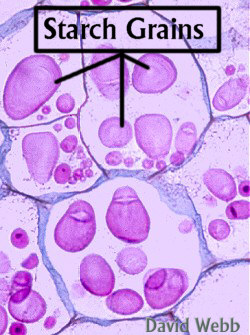
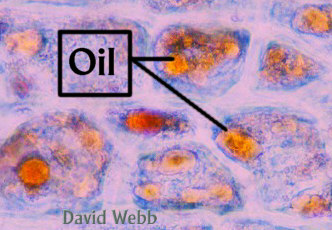
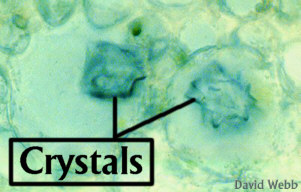
Waste products may also be confined in Parenchyma Cells.
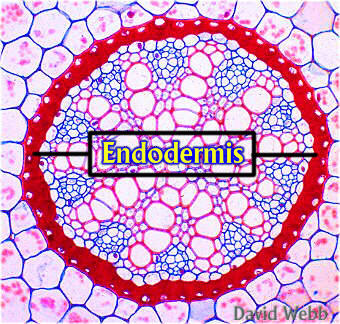
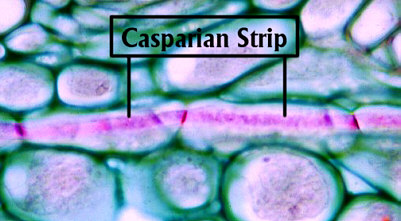
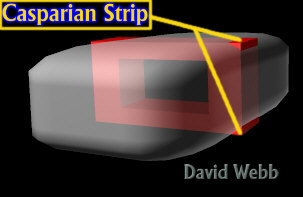
The Endodermis provides physiological control of water & solute movements in All Roots, Many Stems & a Few Leaves. This is one of the most important vegetative adaptations of land plants. It provides a structural & physiological mechanism to bring water and solute movement under biological control. Endodermal cells can lead to solute exclusion OR concentration. The latter is used to produce "Root Pressure" which is the first step in the transport of water from the root into the shoot. Transpiration provides the tension to finish this process. Secondary Growth 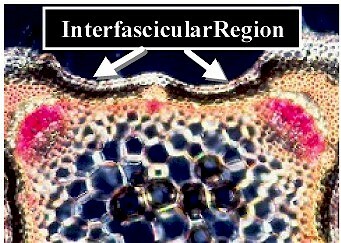 Interfascicular Parenchyma cells are recruited into the Vascular Cambium. 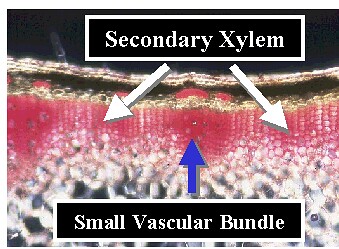
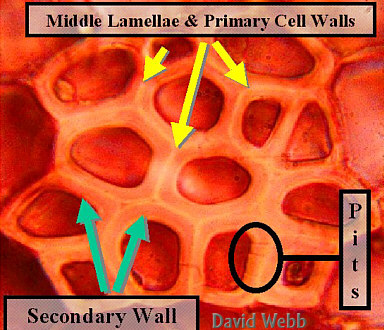
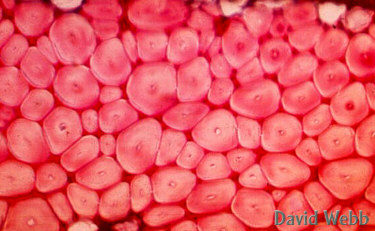
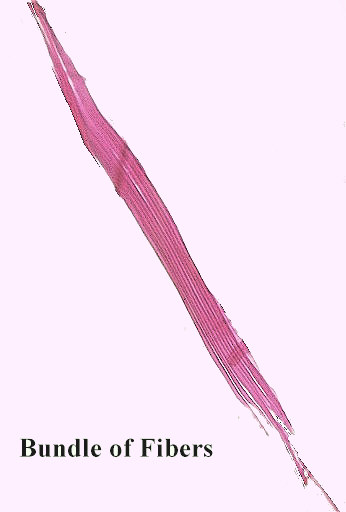
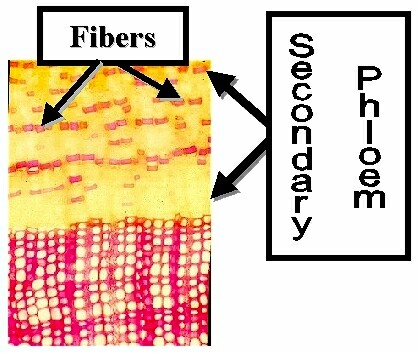
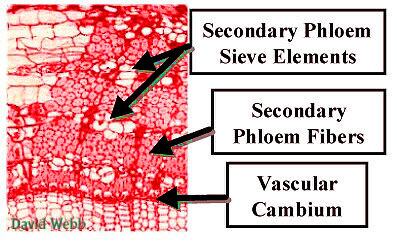
Sclerenchyma provides support for aerial organs. Its thick walls are highly organized and impregnated with Lignin which makes them very strong and waterproof. They are often found in bundles of highly elongated cells which have overlapping (inter-digitating) end walls. The latter adds to their strength.Sclerenchyma cells are frequently present in the Vascular Tissues (Xylem & Phloem) and they account for some of their strengthening properties. |
 Lycopodium Leaf with uniformly shaped, round Chlorenchyma
|