|
 |
The Land Invasion was really an Invasion of the Air!
|
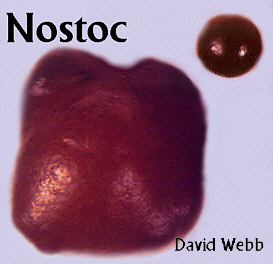 Nostoc a Cyanobacterium can form nodules on wet soil. However, they produce a hydrophilic matrix which holds onto water tenaciously. Consequently the Cells of the filament are still in an Aquatic Environment. The small nodule has the diameter of a penny. |
||||||
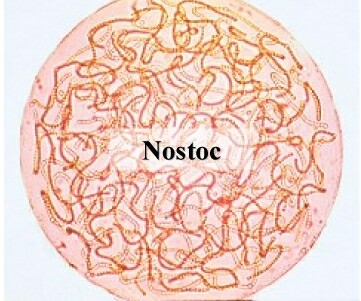 Nostoc and many other Cyanobacteria fix atmospheric Nitrogen. Since N is usually a limiting element in terrestrial habitats, the N fixed by Cyanobacteria was (is) extremely important for the conquest of the land. |
|||||||
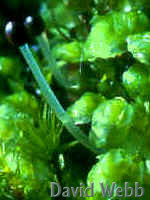 Erect Sporophyte of a Liverwort: A small step up for Plantkind |
 This extremely large & complex Ponderosa Pine grows in a very dry environment. |
||||||
|
|||||||
|
 |
||||||
| Dendroalasia is a Complex Moss. However, it has no way to prevent water loss from its "Leaves". This is its appearance when it is hydrated. Photo by Karen Renzaglia | This is also Dendroalasia but in its dry state. Some organisms can tolerate extreme desiccation and can "revive" following hydration. Such plants are virtually aquatic! Photo by Karen Renzaglia | ||||||


