|
|
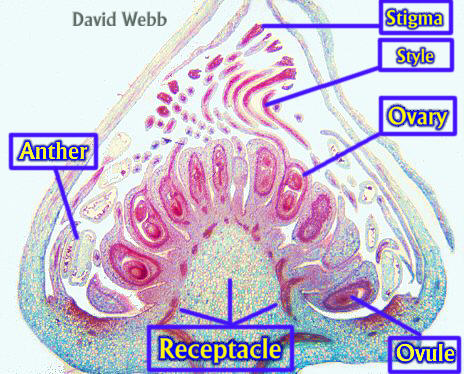
Note that the Carpels occupy the Summit of the Receptacle!
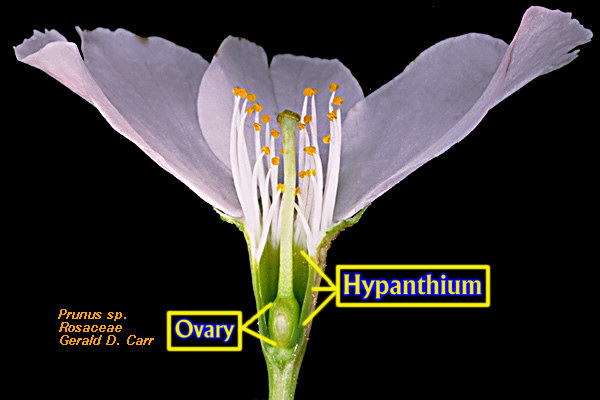
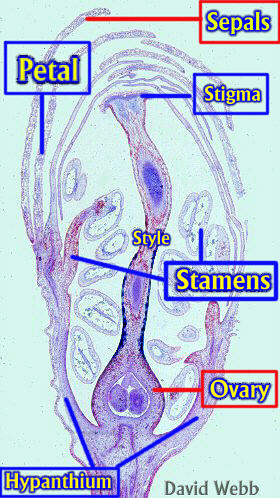
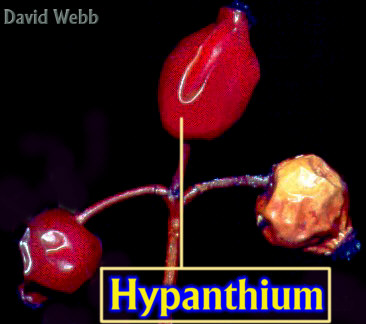
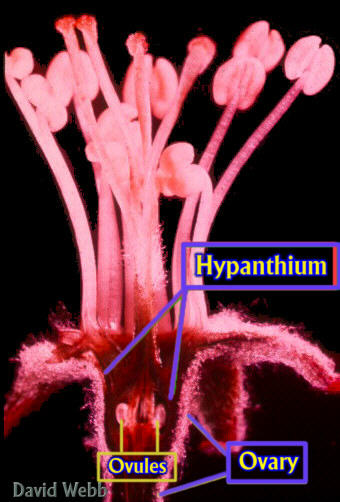
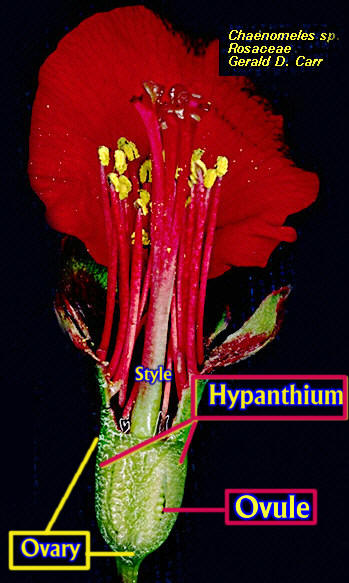
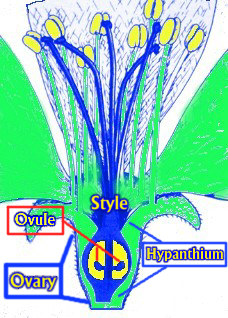
We will now examine Perigynous Flowers. The word Perigynous means Around the Ovary. Perigynous flowers have a Floral Tube or Hypanthium. This is composed of two or more extra-carpelate floral parts which are fused into a common structure. Fusion of unlike floral parts is called Adnation.
The Hypanthium surrounds the Ovary but is NOT fused to it. Consequently the other floral parts (sepals, petals & stamens) appear to originate from the Hypanthium and thus surround the Ovary.
|
|
Wild Rose
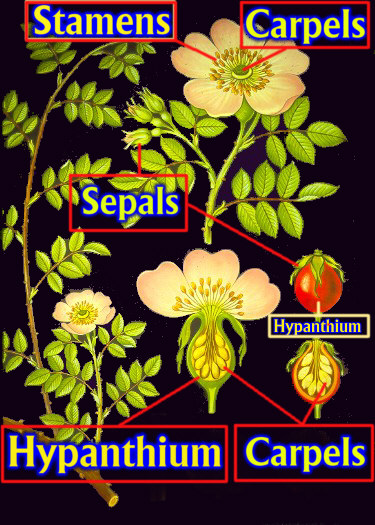 Diagram of a wild Rose Flower & Fruit. The Hypanthium becomes fleshy in the mature fruit. The true fruits are dry achenes. This is another Accessory Fruit. |
 Wild Rose Flower & Fruits
|
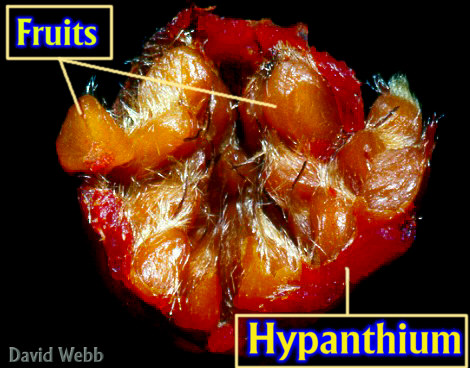 Opened Rose fruit which reveals the hairy Achenes which are the true fruits and the red, fleshy Hypanthium.Prunus Flower Bud macrophoto |
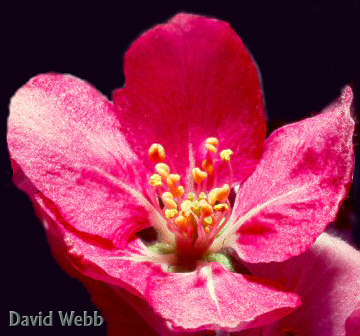
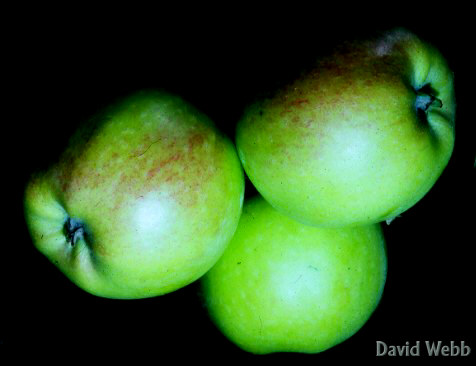
The Sepals, Petals & Stamens appear to originate from the top of the Ovary with Epigynous Flowers like those of Apple (Pyrus). This is due to the fact that the Hypanthium is Adnate (Fused) to the Ovary Wall (Pericarp). Consequently, the fruits will be accessory due to the fused Hypanthium. Epigynous means Above the Ovary!!!
It is the Hypanthium which forms most of the edible part of an apple. The papery inner layer is the innermost layer of the Ovary Wall & is called the Endocarp. The Dark line that surrounds the center of the fruit is the Outer Layer of the Ovary wall & is called the Exocarp. The Mesocarp is the edible portion between the Exo & Endocarp.
|
|
|
|
|
|||