|
Pterophyta - 4 |
|
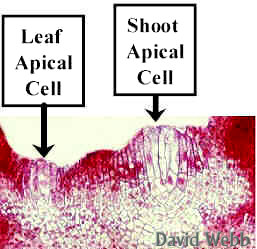
| Leaves are initiated close to the Shoot Apical Cell (SAM).
One recent Derivative Cell becomes a Leaf Apical Cell which
differs from the Shoot and Root Apical Cells because it only divides in two planes &
it has determinate (finite) growth. Shoot & Root Apical meristems have
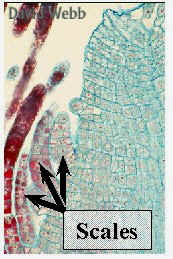
indeterminate growth which means that they can grow over a long time-span. Epidermal derivatives of the SAM can produce large scale-like trichomes.This is the first Division which produces significant Epidermal elaborations other than Rhizoids or Root Hairs. Can you think of any obvious functions for these scales? It is important to know that some ferns produce sessile leaf primordia several years before they will complete their development. They must survive 2-3 seasons before they expand and become functional leaves. How might scales affect this condition, especially in climates which have freezing temperatures? The leaves are often tightly coiled and overarch the Shoot Apical Meristem (SAM). This provides some measure of protection for the SAM. True Buds like those seen with woody angiosperms are not produced. However, internal resting buds can be present. Consequently, the Filicales have devloped some vegetative adaptations which help the SAM endure winter weather. Furthermore, some ferns have several annual sets of leaves present simultaneously. These help to protect the SAM and might be able to develop prematurely if the current year's crop is damaged. |
|