 From Cell to Organ-8

Parenchyma cells can be Isodiametric (equal size in all directions) to elongate in shape. They have thin cell walls which contain a lot of hydrophilic pectins which have a characteristic staining reaction. They usually have well developed Plastids like Chloroplasts or Amyloplasts. Amyloplasts store starch.
 Isodiametric Parenchyma Cell containing Chromoplasts: Each red dot is a Chromoplast that Contains Carotenoids. |
 Elongate Palisade Parenchyma with Chloroplasts |
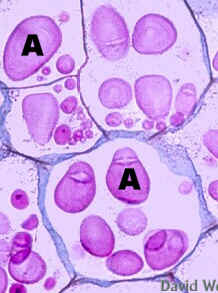 Parenchyma from Potato with large Amyloplasts: This is a commercial slide. |
 Parenchyma Cells containing Amyloplasts. This was stained with IKI which has stained the Starch Brown. |
Sclerenchyma
cells are usually elongate in shape 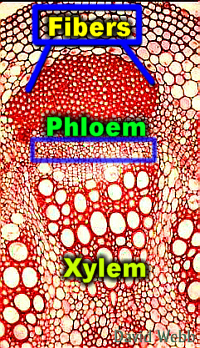 and have thick walls impregnated
with Lignin. They stain red in most prepared slides due
to their Lignin content. Lignin makes cell walls
extremely strong and inflexible. This makes Sclerenchyma
a good support tissue. Sclerenchyma is
usually associated with Vascular Tissues and may completely surround
them.
and have thick walls impregnated
with Lignin. They stain red in most prepared slides due
to their Lignin content. Lignin makes cell walls
extremely strong and inflexible. This makes Sclerenchyma
a good support tissue. Sclerenchyma is
usually associated with Vascular Tissues and may completely surround
them.
