|
||
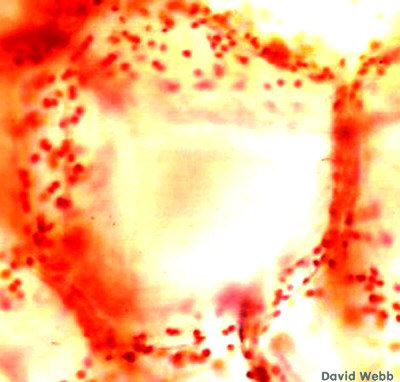 |
Chromoplasts contain accessory pigments, especially carotenoids. These are common in flowers and fruits. These are from "Bell Pepper" (Capsicum sp.) . Note that the pigments are not dispersed as they are when water-soluble pigments are dissolved in the Vacuole. | |
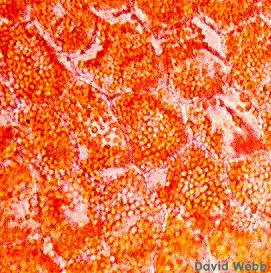 |
Chromoplasts from Marigold Flowers | |
 |
The color of Alamanda flowers is also derived from Chromoplasts | |
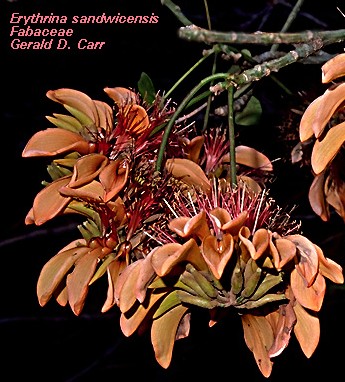 |
The pigmentation of Erythrina (wiliwili) flowers is also due to chromoplasts | |
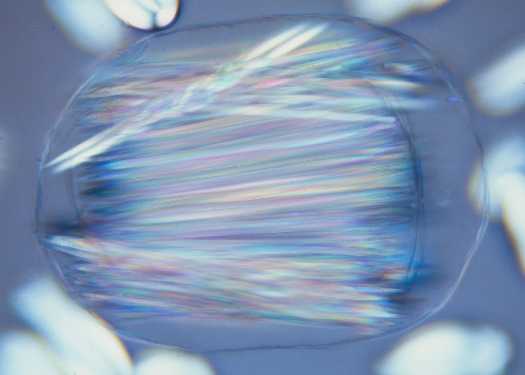 |
The vacuoles of Parenchyma cells can contain crystals of Calcium Oxalate. The most common form is that of Raphides. These are released when the cell is ruptured. Calcium Oxalate causes extreme swelling of epithelial cells. This would be a strong deterrence to herbivory. | |
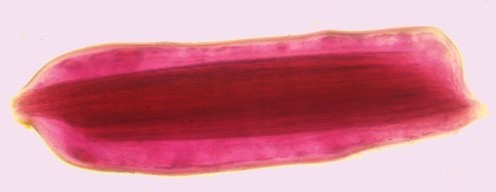 |
Raphides are contained within a carbohydrate matrix within the vacuole. This absorbs water and expands rapidly when the vacuole is ruptured. | |
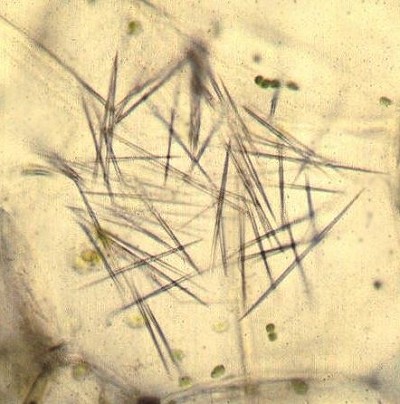 |
These Raphides have been released from the damaged cell. You can see the outlines of the parenchyma cell in the background. | |
 Prior Page |
Home Page |  Next Page |

