|
|||
 Plumaria sp. (Apocyanaceae) is a popular ornamental plant in tropical environments. |
Plants that belong to certain families are well known to exude a milky liquid if they are injured. This has been called latex due to its resemblance to milk. However, this "milk" can terminate the life of the drinker. Plants in the Apocynaceae "Dogbane" family & the "Milkweed" family (Asclepiadaceae) are renowned for their latex production. | ||
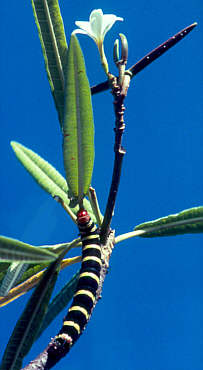 |
While latex from Plumaria can cause nausea or death for humans and other animals, some insects have evolved such that they are not only immune to the adverse effects of this latex BUT they also eat of it & use it to protect themselves. In fact, they are usually brightly colored and easy to spot. They are advertising themselves to predators and saying "Here I am! Eat me if you dare! This caterpillar is eating Plumaria leaves. Savy predators avoid this insect, even when there is little else to eat. | ||
 Alamanda sp. another ornamental member of the Apocynaceae |
 Cascabela (Be still tree) is another famililar member of the Apocynaceae that produces a toxic latex. |
||
 Calotropis is a familair member of the Asclepiadaceae |
Members of the Milkweed (Asclepiadaceae) family are renowned for their Latex production. Hence the designation "Milkweed". | ||
|
|
||
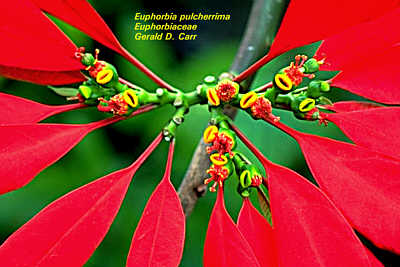 Members of the Euphorbiaceae like Pointsettia are also renowned for the presence of laticifers |
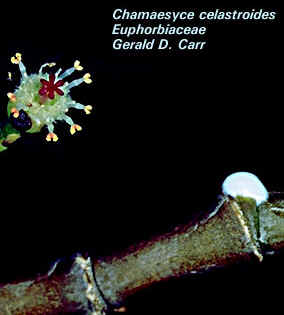 A local Euphorbiaceae |
||
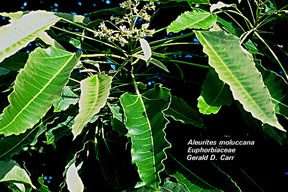 Kukui is also a member of the Euphorbiaceae |
 Kukui Flowers |
||
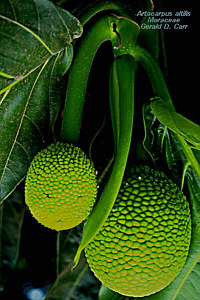 Members of the Moraceae like Breadfruit also have Laticifers. |
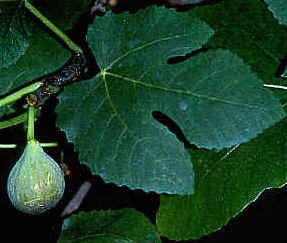 Figs (Ficus) also belong to the Moraceae & have Laticifers |
||
| Lecture Directory |  Prior Page |
 Home Page |
 Next Page |
|---|---|---|---|


