Lycophyta-Selaginellales-1 |
 |
There are over 7000 Species which have worldwide distribution.They are Most Abundant in the Tropics where they can form a Dominant Ground CoverThey can also
be found in Temperate Forests and a few species can be found in Deserts. The most notorious of the latter is the Resurrection
Plant. Its stems rolls up when dry such that the entire
organism has the shape of a ball.
They can be dispersed by wind, like tumbleweed. If it lands in a moist site, its stems
unfurl, roots sprout and it can resume growth. A few
species can be found in the Arctic Alpine zone.
|
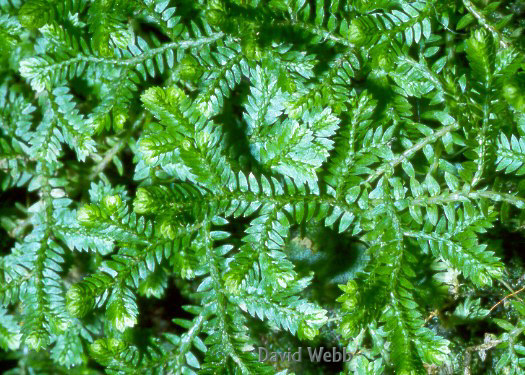
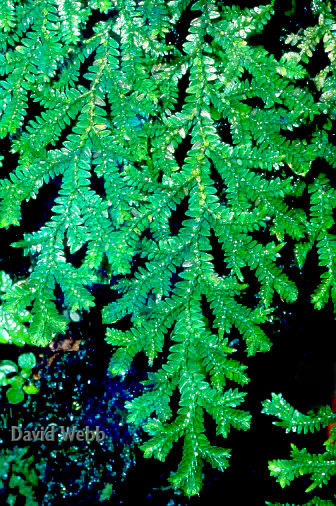
A Tropical Sealginella
|
They are generally Small and are on the order of centimeters or decimeters in length and breadth. They can be Terrestrial or EpiphyticThere are several Growth Forms. Sealginella can be Pendant, Spreading Prostrate, Erect Tufts, or Erect "Fronds" with a Rhizome. The latter are Fern-Like in their overall appearance.Branching is Dichotomous and is usually Anisotomous.Cones are found at the tips of the short branches. |
|