|
 |
There is a Subterranean Rhizome. The
Apical Meristem is an Irregular Dichotomous Branching occurs. The
Epidermis produces Hairs called Rhizoids. These have have a uniform
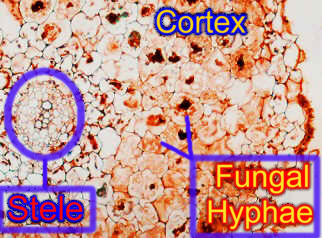
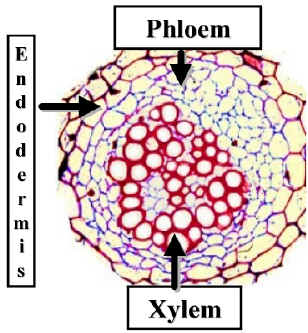
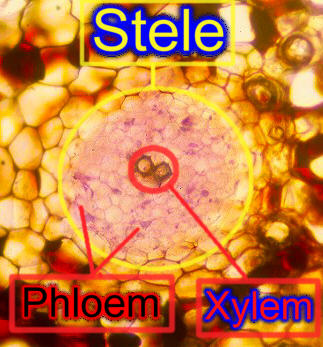
distribution. Mycorrhizal Fungi are present in the Cortex. They pervade the Cortical Parenchyma cells & Increase the Absorptive System for the Rhizome by connecting it with external fungal hyphae. The Cortex also has cells which Store Starch & contain Tannins. An Endodermis with a Casparian Strip is present. The Stele contains Phloem & Xylem. It has a type of Protostele. This includes a Haplostele or Actinostele.
I have included several images because the Stele in Psilotum Rhizomes is not well developed and these images will help you find the Stele in actual specimens. |
The Stele It always contans the vascular tissues, Xylem & Phloem. A Parenchyma layer may be present as a buffer layer between the Endodermis and the Vascular Tissues. This is called the Pericycle. Pericycle means around the wheel. The Wheel is the Vascular Cylinder.
|