|
Lycophyta-Lycopodium-1 |  |
| Diversity is
Medium to Low. There are only Six Genera but thare are 1000 Species. The Genus to remember is
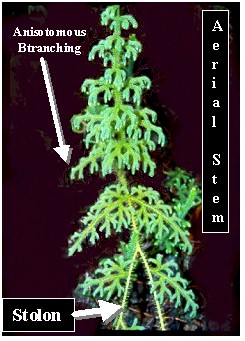
Lycopodium. Their Distribution is world-wide and they occur in virtually all climatic zones which include Tropical,Temperate & Arctic regions. They are small plants and are generally no longer than a meter high. Some pendant Epiphytes exceed this length but their stems are not providing the physical support for these stems to become upright. There are erect forms, some of which resemble dwarf Conifers & have been called "Ground Pine". Some species produce extensive Rhizomes and Stolons which cover many meters on the ground.One local species L. ... has a complex growth form which contains almost all of the features that a Lycopod could desire. They are generally not major
components of the ecosystems in which they are found. However, there are some
circumstances in which they are the dominant vegetation component. |
Small Lycopodium growing in the Arctic-Alpine zone Jasper Canada
|