|
Flowers & Fruits-2
|
|
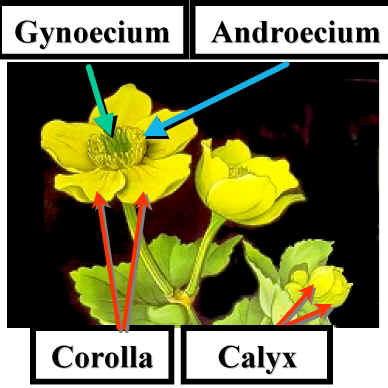
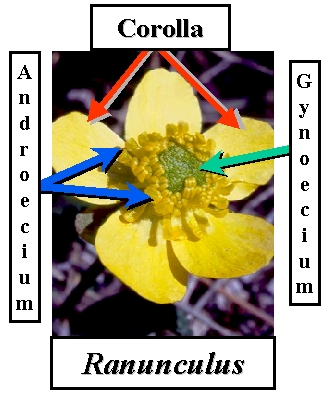
We will use the Buttercup (Ranunculus) as a model of an Apocarpous Flower
Ranunculus flowers showing the progression of flower development from the bud on the right to a mature flower on the left. The Sepals (Clayx) abscise early in development. Compare this to the picture below. Note the presence of many free carpels in the Gynoecium & the numerous Stamens in the Androecium. |
|
|
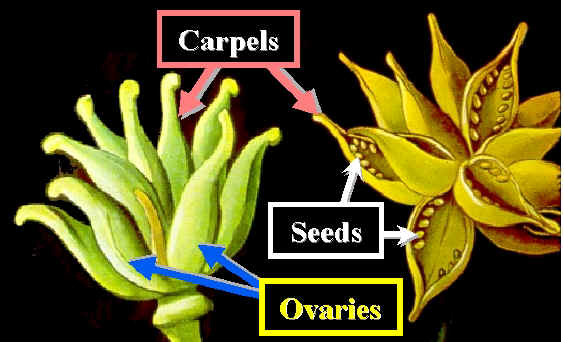
The Carpels contain Ovules in their Ovaries.
These contain the Megagametophyte which is called the Embryo Sac in angiosperms.
The Anther produces Pollen which is the Microgametophyte
|
| Long section through a mature Ranunculus flower. Note the Ovules which lie in the Ovaries of each Carpel. The Ovules contain the Megagametophyte or Embryo Sac. Also note the Stamens which produce Pollen the Microgametophyte. |
Each Carpel produces a Fruit. Ranunculus produces a dry dehiscent fruit which splits once longitudinally (Folicle).
The Ovules mature as Seeds which are released to the ravages of nature.
|
Diagram of Ranunculus Gynoecium. Note the many individual free Carpels which comprise the Gynoecium. Note the Seeds which developed from the Ovules. |
How is this Similar to the Coniferophyta? How is it Different?
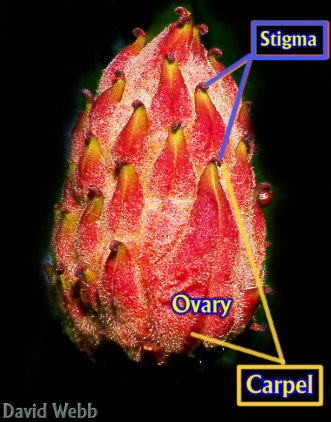
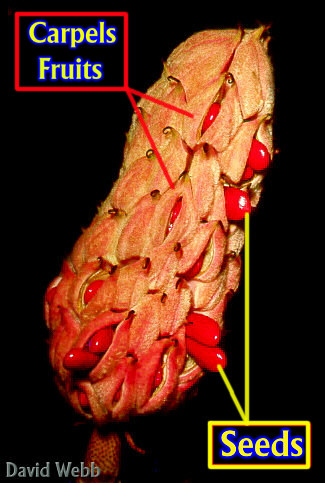
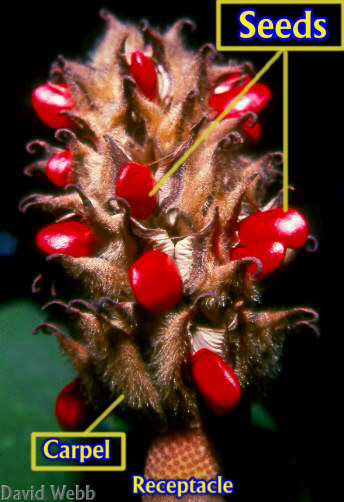
Species of Magnolia can have Many Petals, Stamens & Carpels. The Gynoecium is Apocarpus like Ranunculus.
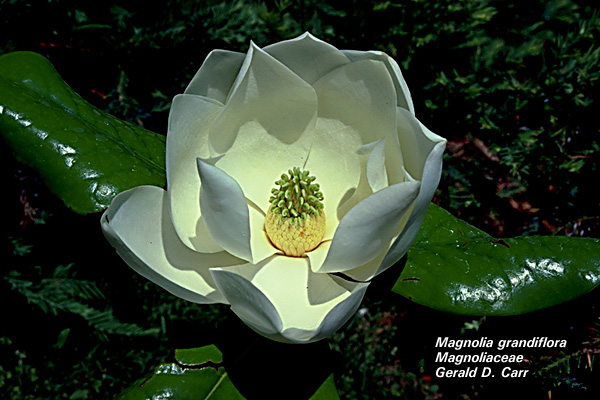 Magnolia Flower: Note the many Carpels at the apex of the Receptacle. |
 |
 |
 |
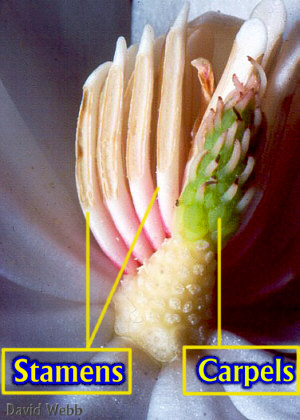 Magnolia Flower: Petals removed to reveal the Androecium & Gynoecium: Note the Many Stamens & Carpels. |
Magnolia Carpels after Fertilization. Each Red Carpel containes a single Seed in its Ovary. A single Carpel liec between the yellow lines. | Magnolia Carpels: The Carpels become Fruits (Folicles). These are not ALL fully Mature, but the ripe Seeds have begun to emerge from those Carpels that are mature. | Magnolia Carpels fully Mature. The Mature Carpel is called a Fruit. In this case the Fruit is a Dry Dehiscent Follicle. |