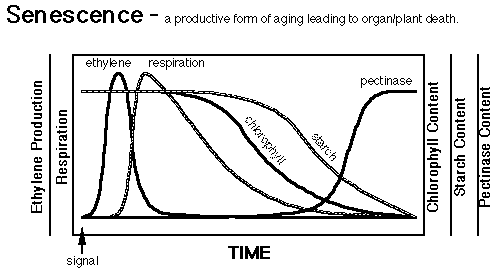
The symptoms of senescence now become more visible. Many complex macromolecules are responsible for the appearance of plant parts and as they are degraded, the appearance changes. The green chlorophyll molecule is degraded and the plant tissues lose the characteristic green color. This reveals yellow pigments (much less expensive) which were present before, but which were masked by the heavy green color. As a byproduct of metabolism, red pigments are produced during sencence. Starch, responsible for the bulk of many tissues, is hydrolyzed (the tissue becomes sweet) and the sugar may be transported, resulting in loss of tissue volume and shriveling. The firm tissue becomes softened as pectinases disintegrate the cellular connections in the tissues.
Note: because ethylene is the starting hormone signal, one ripening apple will cause those around it to also ripen. One bad apple spoils the whole barrel.
With these observations, one might expect that all parts of the plants would senesce simultaneously. This is not always the case. Other hormones may antagonize the effect of ethylene; notably cytokinins and gibberellins do this remarkably well. The seeds in a developing fruit produce such signals and delay fruit senescence until all vegetative and other floral modules have senesced and contributed maximally to the survival of the seeds inside the fruit. Roots, widely regarded as a source of cytokinins, usually are last to senesce, and are perennial in many species in which the stems and leaves senesce and die annually.
The vegetable and fruit industry is interested in extending the post-harvest shelf life of produce in the market. This job is difficult, because any chemical treatments used to prevent senescence must be safe for human consumption. Apples are harvested before natural senescence, are cooled immediately to slow respiration, and the storage chamber air is passed continuously through charcoal to absorb any ethylene produced by a ripening apple. For difficult species, the atmosphere is changed to high carbon dioxide concentration to control respiration and antagonize ethylene reception. GA is approved for human consumption and is used on some fruits.
The florist industry is greatly interested in delaying floral senescence and extending vase life. Since flowers are not usually eaten, the approach is somewhat different. While the flowers are harvested immature and are cooled immediately thereafter to prevent the climacteric, they are also treated with poisonous anti-ethylene agents such as Silver Nitrate and Cobalt Chloride. The vase water is also treated with antibacterial and antifungal agents (Sodium Benzoate or Hydroxyquinoline Sulfate) to prevent the type of senescence these contaminants induce.
Go back to the Course Schedule.