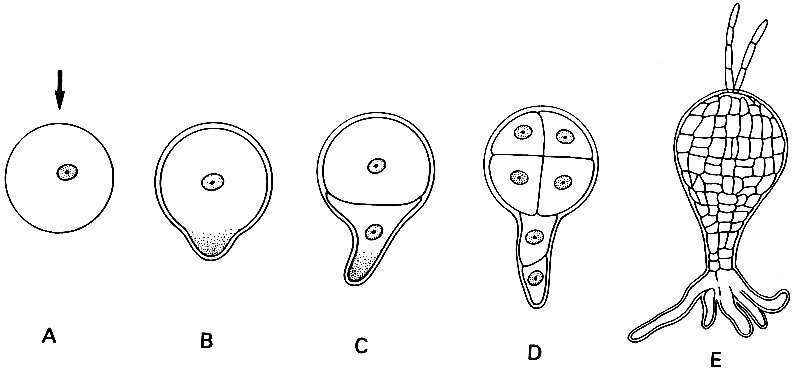
Figure 1. Schematic diagram of brown algal development.
(A) After fertilization, the zygote is initially spherical and
apolar. During the next 14 hours, the zygote will develop a
cytological asymmetry that leads to polarity visible at the gross
morphological level. The orientation of that polarity is determined
by an external gradient, such as unilateral light (arrow). (B) The
initial sign of polarity visible at the whole-cell level is rhizoid
tip elongation, which occurs at 10 to 14 hours after fertilization.
Secretory vesicles are associated with the localized tip growth
that occurs on the shaded side of the zygote. (C) At
approximately 24 hours post-fertilization, the initial cell division
occurs, dividing the zygote asymmetrically and producing two
morphologically distinct cells. The larger, nearly spherical thallus
cell contains most of the chloroplasts, whereas the smaller,
elongated rhizoid cell contains more secretory vesicles and
mitochondria, and continues to exhibit tip growth. (D) Further
divisions give rise to an embryo which resembles that of higher
plants at the globular stage. Descendants of the thallus cell will
eventually give rise to the reproductive and photosynthetic
structures of the plant (the fronds). Cells derived from the rhizoid
continue to elongate via tip growth, and will form the mature plant's
holdfast, which attaches to the underlying rocks. (E) A mature
germling with multiple rhizoids that form the holdfast and apical
hairs.