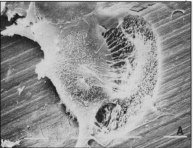
Scanning electron micrograph of isolated osteoclast resorbing cortical bone in slice in vitro.
Bone is a remarkable, multifunctional organ. The cells and matrix comprising skeletal tissue form a specialized architecture uniquely adapted for weight bearing, motion, and marrow development. Bone also serves as a mineral reservoir for the organism an d is, by necessity, highly responsive to complicated endocrine signals responsible for maintaining and modifying mineral homeostasis. In addition, the complex bone matrix may serve as a growth factor repository and thereby operate to influence haematopoi etic events and contribute to the regenerative properties of bone. Bone modeling during development and remodeling throughout life are dependent upon factors that regulate the number and activity of both bone-forming osteoblasts and bone-resorbing multin ucleated osteoclasts. Deciphering the biochemical and molecular mechanisms that govern bone cell precursor recruitment, differentiation, and activity is, therefore, important for understanding both normal and pathological processes in bone.
The bone-resorbing multinucleated osteoclast derives from cells related to the mononuclear-phagocyte family and is, therefore, of haematopoietic origin. The osteoclast is believed to degrade none matrix by releasing hydrolytic enzymes, superoxide radical s, and protons into what can best be described as an extracellular phagolysosome. There are many unanswered questions about the exact developmental relationship between osteoclasts, osteoclast precursors, and other cells of the mononuclear - phagocyte fa mily, and about the osteoclast plasma membrane. Therefore, the research in our group focuses on: (1) identifying and characterizing unique osteoclast plasma membrane proteins to better understanding how the specialized bone-resorbing ability of this cell is accomplished and regulated; (2) identifying factors derived from the bone environment that influence osteoclast development and aging; and (3) examining how osteoclasts and their matrix degradation products influence bone-forming osteoblasts.
The complexity of signals, cells, and environment involved in these events requires that we examine the multitiered interplay between local and such humoral factors as calcium regulating hormones (parathyroid hormone and calcitonin) as well as steroid hor
mones (estrogen). Our methods for investigating these questions include the isolation and culture of mature osteoclasts and of osteoclast precursors. Monoclonal antibody ad cDNA libraries have been developed to assist in the identification and character
ization of unique osteoclast plasma membrane proteins. These probes also are useful in bioassays designed to identify factors influential in osteoclast development. An assortment of morphological and functional analysis are used to assess osteoclast dev
elopment and activity.